DUTY BELT COMFORT — HOW THE SHIRT TUCKER WORKS UNDER A DUTY BELT
The Shirt Tucker sits under your duty belt, keeps your uniform shirt tucked all shift, and actually cushions the pressure from a loaded duty belt.
 BeforeAfter

On patrol, in corrections, on post — one belt, a whole shift.
Yes — the Shirt Tucker works under a duty belt. It wraps around your waist inside the pants waistband, over the tucked shirt. Your inner belt and duty belt go on the outside of the pants as normal. The two never touch. Officers report it keeps the uniform tucked through full 12-hour shifts — and the rubber actually cushions some of the duty belt's downward pressure.
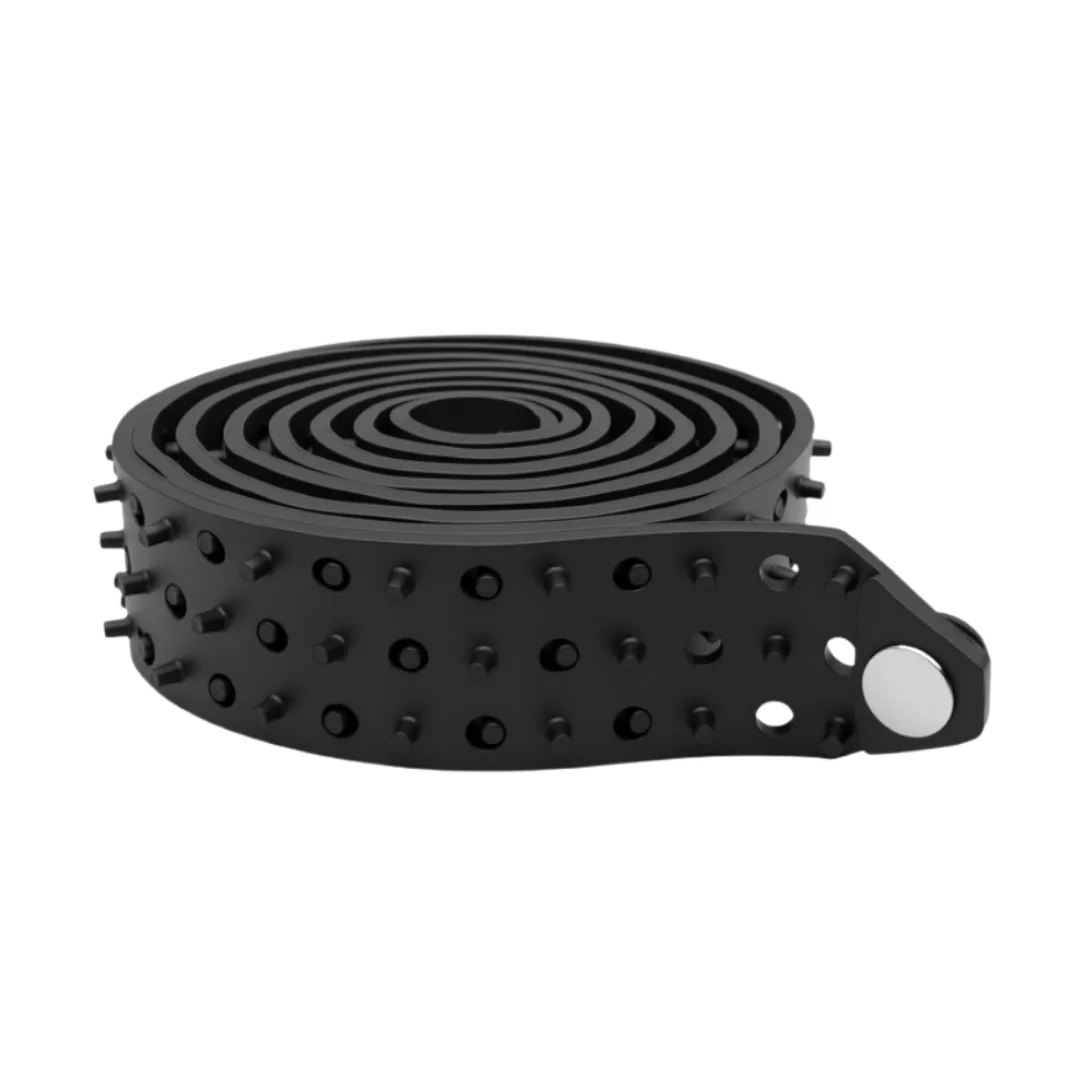
Built for Duty Belt Wear
The non-slip rubber grips your uniform fabric through any movement — pursuits, vehicle entries, physical encounters — without leg straps or constant re-tucking.
THE DUTY BELT PROBLEM — WHY SHIRTS UNTUCK ON SHIFT
A loaded duty belt weighs 15 to 25 pounds. That weight sits on top of your pants, pressing downward on the waistband all day. Every time you sit in the cruiser, stand up, bend to cuff someone, or run — that weight shifts and pulls.
The result: your uniform shirt gets dragged, bunched, and eventually pulled free from the waistband. Most officers re-tuck multiple times per shift. During a traffic stop or a foot pursuit, an untucked shirt isn't just unprofessional — it can snag on equipment.
The traditional fix — leg-strap shirt stays — creates its own problems. Elastic straps running from your shirt hem to your socks restrict leg movement, dig into skin during long shifts, and must be removed every time you use the restroom. For active law enforcement, that's a significant operational drawback.
Officers don't need a more complicated shirt stay. They need a simpler one — something that holds the shirt without contacting the legs, without interfering with the duty belt, and without requiring attention during a shift.
HOW THE SHIRT TUCKER WORKS WITH A DUTY BELT
The Shirt Tucker is a rubber waist belt that wraps around the outside of your tucked shirt, inside the waistband of your pants. It sits between two layers: the shirt on the inside, the pants on the outside. Your inner belt and duty belt go on the outside of the pants — completely separate.
The Layering Order
Tuck Your Uniform Shirt
Tuck your shirt into your pants as you normally would. Get it reasonably smooth — the Shirt Tucker will hold whatever position you set.
Wrap the Shirt Tucker
Wrap the rubber belt around your waist, over the tucked shirt, inside the pants waistband. Connect the flex peg closure. Takes about 10 seconds.
Pull Up Your Pants
Pull your uniform pants up over the Shirt Tucker. The rubber belt is now sandwiched between shirt and pants — invisible and secure.
Add Your Inner Belt + Duty Belt
Thread your inner belt through the pants loops as normal. Attach your duty belt on top. The Shirt Tucker is the first layer — everything else goes on top.
Key point: The Shirt Tucker and the duty belt never occupy the same layer. The rubber belt is inside the pants; the duty belt is outside the pants. There is zero interference between the two.
WHY THE RUBBER ACTUALLY HELPS DUTY BELT COMFORT
Officers who use the Shirt Tucker report an unexpected benefit beyond shirt tucking: the rubber belt cushions some of the duty belt's downward pressure.
A loaded duty belt concentrates 15 to 25 pounds across a narrow strip of your waist. That pressure creates friction burns, hip bruising, and the general discomfort that every officer knows after an 8 or 12-hour shift. The Shirt Tucker's rubber adds a thin, flexible cushion layer between the duty belt (via the pants fabric) and the skin.
It's not a dedicated duty belt pad — it's 1.5 inches wide and under 2mm thick. But officers consistently report that the area covered by the Shirt Tucker feels noticeably less irritated at end of shift. The rubber absorbs and distributes a small amount of the concentrated pressure.
SHIRT TUCKER VS LEG-STRAP STAYS FOR DUTY BELT USE
Both keep your shirt tucked. But for law enforcement specifically, the differences are critical:
| Feature | Shirt Tucker | Leg-Strap Stays |
|---|---|---|
| Duty belt compatible | Yes — different layer | Yes |
| Leg movement | Unrestricted | Restricted by straps |
| Draw stroke affected | No | No |
| Bathroom break | No removal needed | Must unclip both legs |
| Vehicle entry/exit | Normal | Straps pull during movement |
| Foot pursuit | No restriction | Straps limit stride |
| Setup time | 10 seconds | 2–3 minutes |
| Comfort over 12hr | Cushions duty belt | Chafes legs |
| Price | $19.99 | $12–$25 |
| Lifespan | 2–4 years | 3–6 months |
The Shirt Tucker is the better choice for duty belt wear
Leg-strap stays work for tucking — but they create movement restrictions that are a liability for active law enforcement. The Shirt Tucker provides the same tucking hold with zero leg contact, zero movement restriction, and the added benefit of a thin cushion layer under the duty belt.
THE SHIRT TUCKER
No leg straps. Works under any duty belt. Holds all shift.
Shop Now — $19.99HOLSTER & EQUIPMENT COMPATIBILITY
Officers ask whether the Shirt Tucker interferes with specific duty belt equipment. The answer is no — because the two are on completely different layers:
- Holster (any retention level): The Shirt Tucker is inside your pants. Your holster mounts to the duty belt on the outside. Draw stroke is completely unaffected — same angle, same grip, same retention release.
- Magazine pouches: Same layer separation. Mag changes are identical with or without the Shirt Tucker.
- Radio holder: Mounted on the duty belt, outside the pants. No contact with the Shirt Tucker.
- Handcuff case: Outside layer. No interference.
- TASER holster: Outside layer. Cross-draw or strong-side — no effect.
- Body camera: Mounted on the uniform shirt or vest. The Shirt Tucker actually helps here — keeping the shirt flat and wrinkle-free makes the camera mount more stable.
- Ballistic vest (external carrier): The vest sits over the shirt, outside the Shirt Tucker. Compatible. The rubber belt helps keep the shirt smooth under the vest carrier.
COMMON DUTY BELT SCENARIOS
Vehicle Entry and Exit
Getting in and out of a patrol vehicle is the number one reason uniform shirts come untucked. The seatbelt pulls across the torso, the shirt bunches as you twist to exit, and the duty belt weight shifts. The Shirt Tucker's rubber grip holds through every entry and exit.
Foot Pursuit
Full sprint with 20+ pounds of gear. Leg-strap shirt stays restrict stride length and can snap loose during explosive movement. The Shirt Tucker sits at the waist — no leg contact, no stride restriction. The rubber grip holds through any speed or direction change.
Physical Confrontation
Ground work, reaching, pulling — these are the most demanding movements for shirt tucking. The Shirt Tucker's 360-degree rubber grip holds because it doesn't rely on one point of contact. Unlike a clip or strap that can pull loose from a single direction, the rubber wraps the entire waist.
Bathroom Break
With leg-strap stays, every bathroom break requires unclipping both legs, re-clipping after, and re-adjusting. The Shirt Tucker stays on — you lower your pants, do what you need to do, pull pants back up. The rubber belt doesn't move. Zero additional time.
HOW TO CHOOSE YOUR COLOR
The Shirt Tucker comes in Black, White, and Grey. For duty belt wear:
- Black: Best match for dark uniforms (navy, black). Most popular with law enforcement. Completely invisible under dark uniform pants.
- White: Best for light-colored dress shirts or medical uniforms. Prevents any chance of the rubber color showing through thin fabric.
- Grey: Versatile middle option. Works well with both light and dark uniforms.
Most officers choose Black. If you're unsure, Black works with everything.