WHAT IS A GIG LINE AND HOW TO KEEP IT PERFECTLY STRAIGHT
The straight vertical line down the front of a sharp uniform isn't luck — it's the gig line. Here's exactly what it is, how to set it, and how to keep it dead-straight from morning formation to evening inspection.
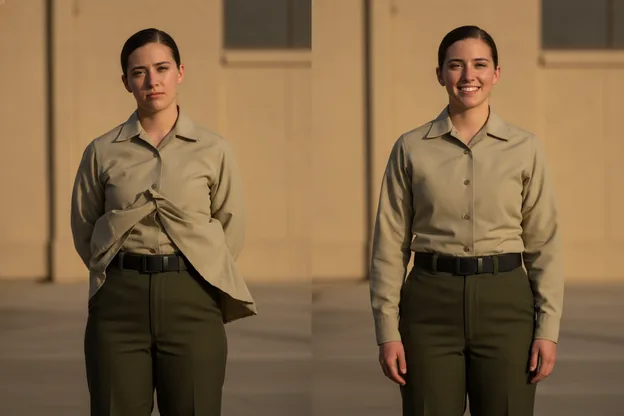 BeforeAfter

Garrison, field and dress — the gig line holds.
A gig line is the straight vertical line formed when three edges line up: the edge of your shirt placket (the front button strip), the edge of your belt buckle, and the edge of your trouser fly. When all three stack into one clean vertical line, you have a "straight gig line" — a hallmark of a sharp military, law enforcement, or service uniform. The term comes from military slang, where a "gig" is a demerit; a crooked line earns a gig at inspection. The gig line drifts during the day because your shirt rotates at the waist as you move, pulling the placket off-center — which is why service members keep it straight by pairing a proper tuck with a shirt stay like the Shirt Tucker.
WHAT IS A GIG LINE THE THREE-POINT ALIGNMENT
A gig line is the imaginary straight line that should run vertically down the center-front of your body when you're in uniform. It's formed by three separate edges that, when properly dressed, all fall along the same plumb line:
- The shirt placket: the edge of the button strip running down the front of your shirt.
- The belt buckle: the edge of the buckle (traditionally the left edge, in line with the shirt).
- The trouser fly: the edge of the fly seam on your pants.
When those three edges form one unbroken vertical line from your collar to your waistband, you have a straight gig line. When they zig-zag — placket pulled left, buckle centered, fly drifting right — you have a crooked gig line, and it reads as sloppy from across the room.
Where the name comes from: In military slang, a "gig" is a demerit handed out during inspection. A misaligned shirt-belt-fly line is one of the fastest ways to earn one — so "keeping a straight gig line" became shorthand for a squared-away appearance. The term spread from the armed forces into police, security, and other uniformed services.
HOW TO SET A STRAIGHT GIG LINE STEP BY STEP
Setting a clean gig line takes about a minute. The hard part isn't setting it — it's keeping it there. Here's the technique:
Square your shirt placket to your centerline
Button your shirt fully and make sure the placket runs straight down the middle of your body. It should sit dead-center over your sternum and navel, not rotated to either side.
Tuck and remove the side bulk
Tuck your shirt in and fold the excess fabric back at the sides (the military tuck) so the waist is flat. A bunched, twisted waist is the number-one cause of a placket that won't sit straight.
Line up your belt buckle
Center your belt so the edge of the buckle aligns with the edge of the placket. On most uniform standards the buckle's edge should meet the shirt's edge in one continuous line.
Align the trouser fly
Adjust your trousers so the fly seam falls directly below the buckle edge. Placket, buckle, and fly should now share a single vertical line.
Step back and check it's plumb
Look in a full-length mirror. The three edges should form one straight line from collar to fly — no steps, no drift. Then lock the shirt in place so it can't rotate, or the line you just set will be gone by mid-morning.
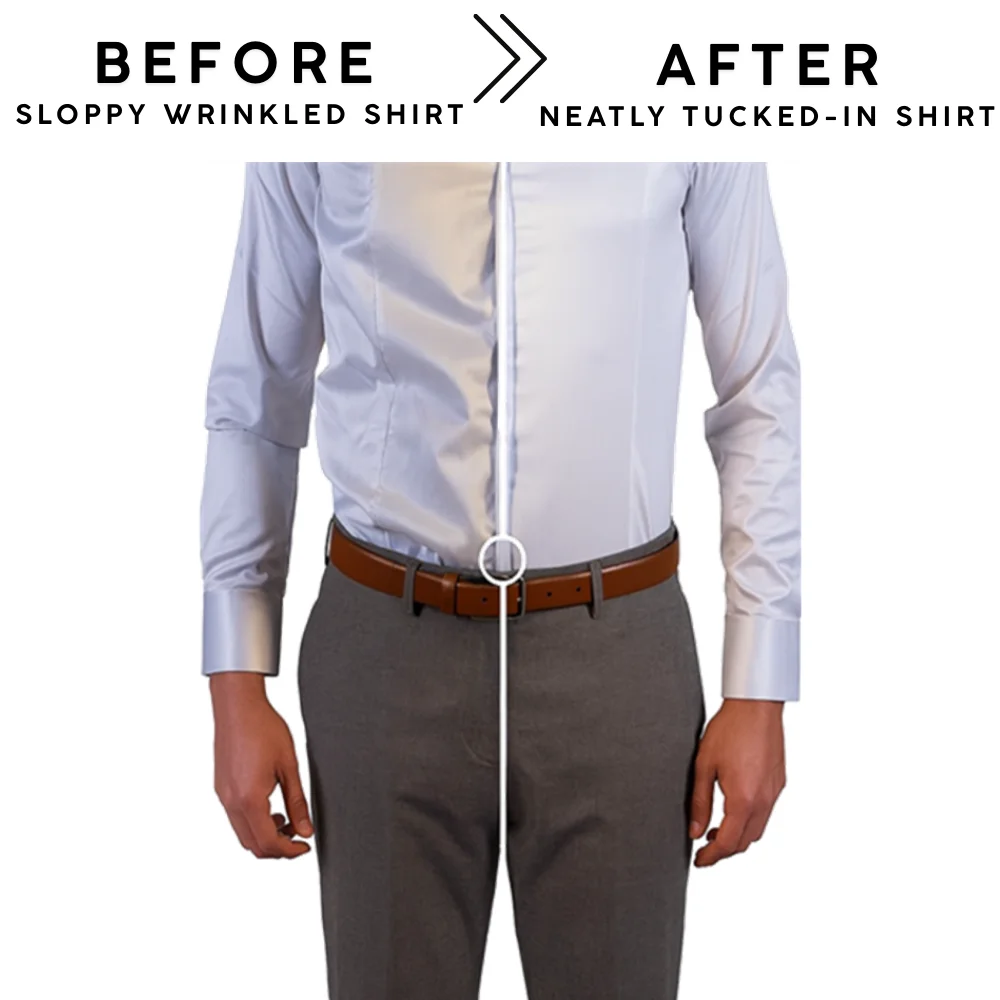
Left: shirt rotated, gig line broken. Right: shirt locked with the Shirt Tucker, gig line straight all day.
WHY YOUR GIG LINE DRIFTS AND WON'T STAY STRAIGHT
You can set a perfect gig line in the mirror and watch it fall apart by lunch. The cause is almost always the same: your shirt moves. Here's what pulls it out of line:
- Shirt rotation: the biggest culprit. As you reach, twist, sit, and stand, your shirt slowly rotates around your waist, dragging the placket off your centerline.
- Placket creep: every time you sit or bend, fabric pulls up and to one side, nudging the button strip away from the buckle.
- Belt and waistband shift: a buckle that slides even half an inch breaks the alignment between shirt and fly.
- A loose tuck: if the tuck relies on friction alone, there's nothing actually holding the shirt's position — so the line you set has nothing to anchor it.
This is why a gig line that looks perfect at 0600 is crooked by 1000. The alignment was never locked — it was just balanced, and movement tips the balance.
Gig Line With a Tuck Alone
- Looks sharp for the first few hours
- Placket rotates as you move
- Needs constant re-adjusting
- Drifts during PT and long shifts
- Crooked by mid-morning
Gig Line With the Shirt Tucker
- Stays straight 12+ hours
- Non-slip grip stops the shirt rotating
- Set it once, forget it
- Survives PT, patrol, and full shifts
- Inspection-ready all day
HOW TO KEEP YOUR GIG LINE STRAIGHT ALL DAY LOCK THE SHIRT IN PLACE
A straight gig line is really a question of whether your shirt can move. If the shirt can rotate, the placket will drift and the line breaks. Stop the rotation and the line holds — all day, with no re-adjusting.
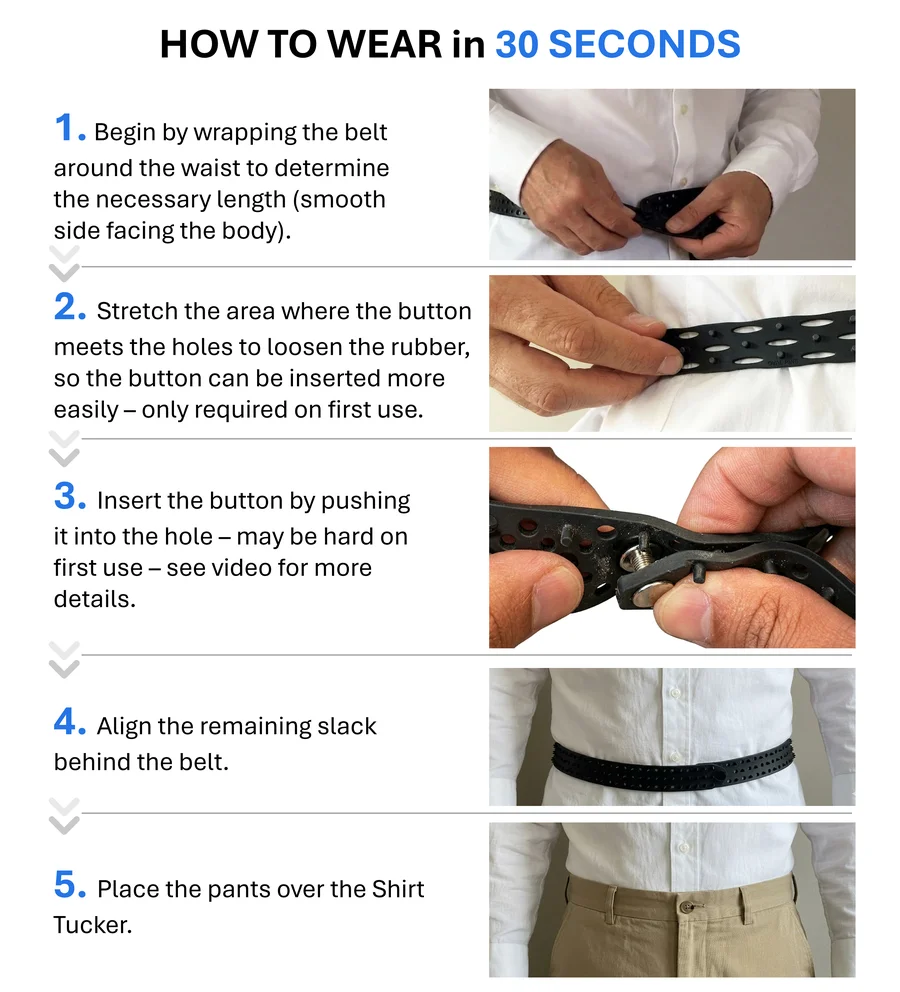
That's exactly what the Shirt Tucker does. It's worn at the waist (under your shirt, inside the waistband) with no leg straps. The non-slip rubber grips your shirt fabric continuously, so the shirt can't rotate around your body — which means the placket stays centered over the buckle and fly from the moment you dress until you change. You set the gig line once in the mirror, and it's still straight at inspection.
- Stops the rotation at the source: the grip holds the shirt's position, so the placket can't wander off your centerline.
- No leg straps: full mobility for PT, patrol, climbing, or a 12-hour shift — nothing strapped to your legs.
- Invisible and inspection-ready: it sits entirely at the waist, hidden under your shirt and outer belt. Nothing shows.
- Works with the military tuck: the tuck cleans up the waist; the Shirt Tucker holds the whole thing — tuck and gig line — in place.
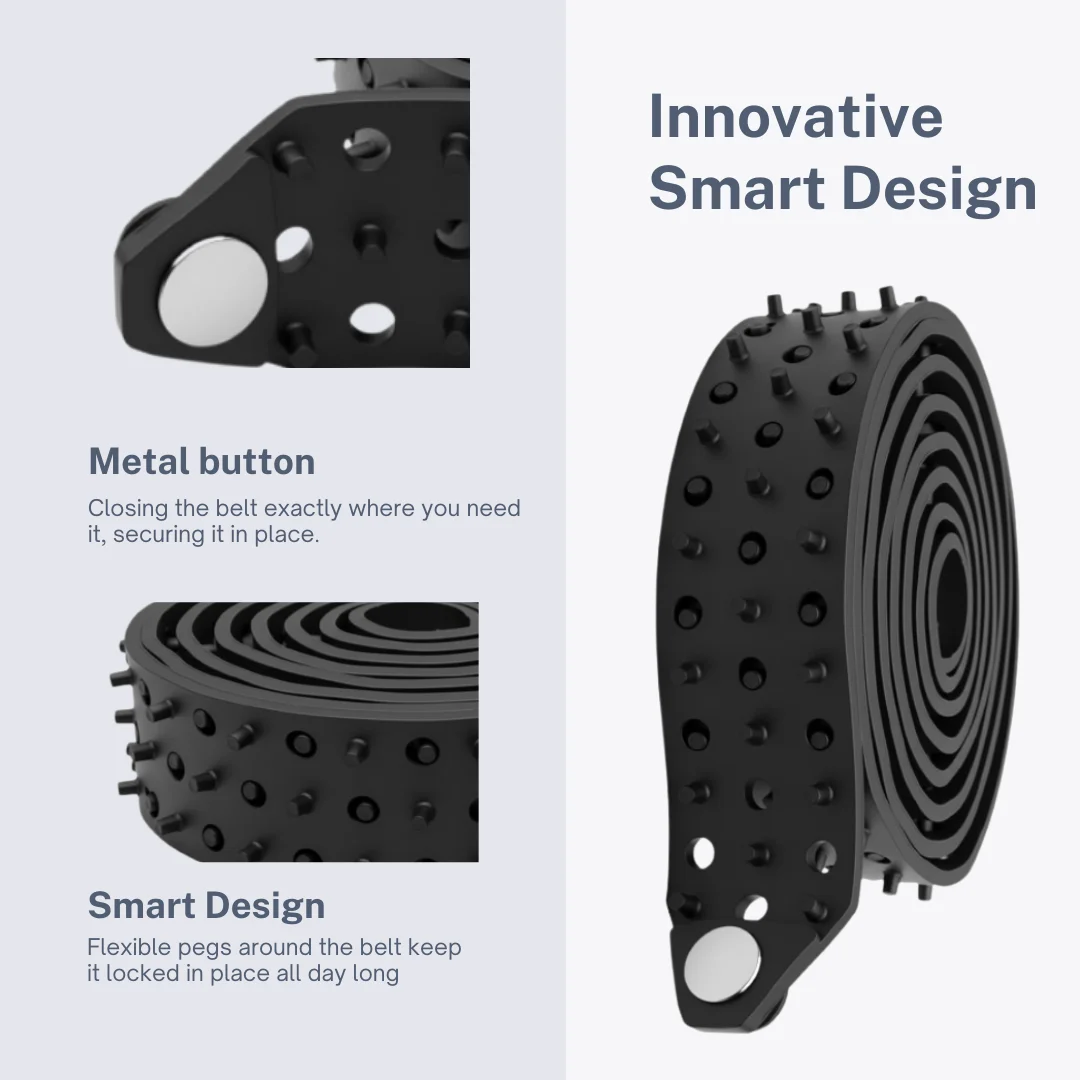

THE SHIRT TUCKER
The belt that keeps your shirt — and your gig line — locked straight all day. No leg straps, no re-tucking, inspection-ready.
Shop Now — $19.99