SHIRT STAYS FOR SENSITIVE SKIN
If clips, elastic, and metal against your leg leave you red and itchy, the fix is a stay that never touches your skin.
 BeforeAfter
Workdays, weekends and the course — the same belt in every one.
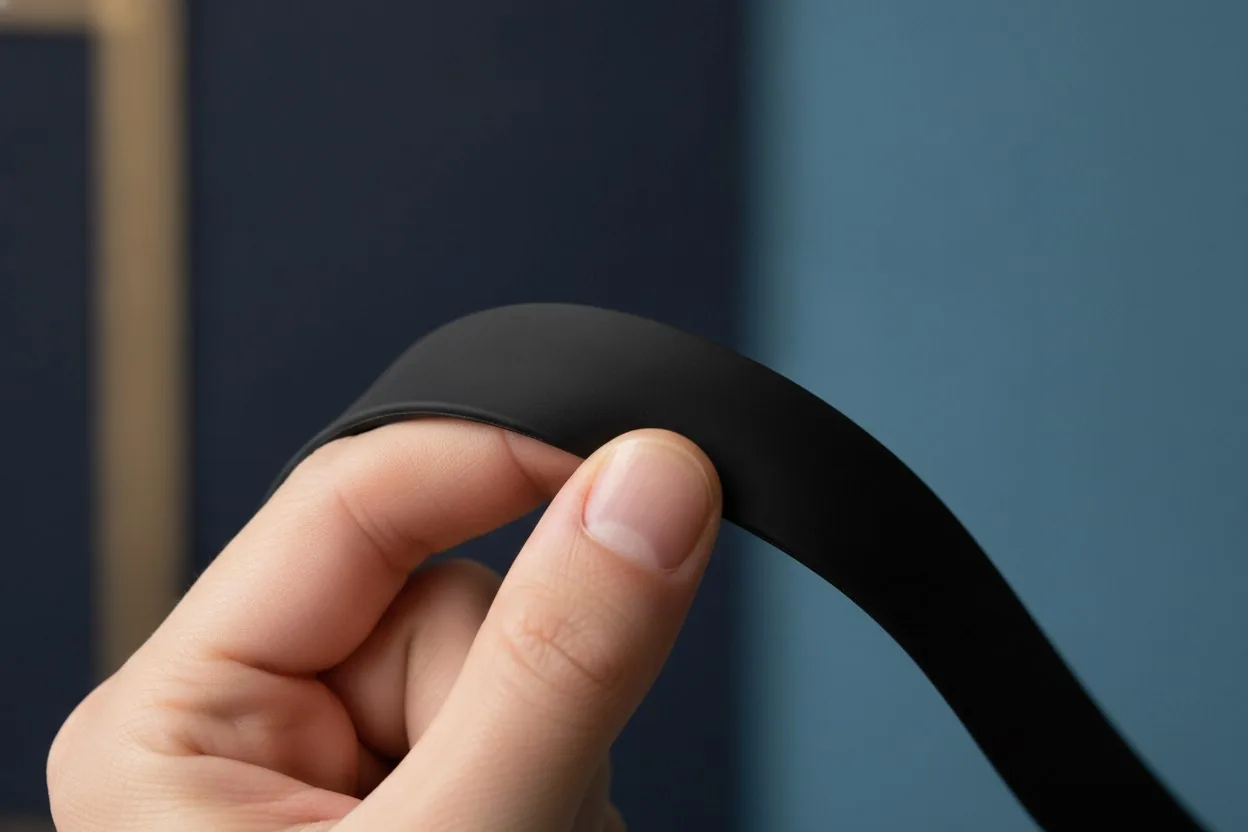
For reactive skin, the fewer things touching it, the better.
If you have sensitive or reactive skin, leg-strap stays are the worst choice — metal clips, elastic, and constant friction against the leg can chafe, redden, or irritate skin over a long day, and some people react to nickel in the clasps. The gentlest option is a waist-only rubber belt worn over your shirt: it never contacts bare skin, has no metal clips, and holds by friction against fabric — so there's nothing rubbing your skin at all.
WHAT IRRITATES SKIN ABOUT GARTERS
Leg-strap shirt stays are built to sit against your skin. The elastic runs down the leg, the clips press into the skin near your sock or calf, and everything is held there under tension for the whole time you wear them. For most people that's merely uncomfortable, but for sensitive or reactive skin it's a recipe for redness and irritation.
Three things do the damage: metal, elastic, and friction. The metal clasp can trigger a reaction on contact, the elastic and its dyes can bother reactive skin, and the constant micro-movement of the strap against one patch of skin acts like low-grade sandpaper over an eight-hour day. Add sweat or heat and it gets worse, because moisture softens skin and increases chafing.
METAL, ELASTIC, AND FRICTION
Nickel is the classic culprit. Many garter clasps are nickel-plated, and nickel is one of the most common contact allergens — so a nickel-sensitive wearer can develop an itchy, red patch exactly where the clip sits. Because most people clip the same spot each day, the reaction concentrates in one place.
Elastic and friction do the rest. Even a nickel-free strap keeps a band of elastic pressed against your leg, and any surface held tight against moving skin will eventually chafe someone with a low irritation threshold. The tighter you set the stay to keep your shirt down, the more pressure and friction you create — so the very adjustment that makes garters work also makes them harder on your skin. There's no setting that removes the contact.
WORN OVER THE SHIRT, OFF THE SKIN
The cleanest solution for sensitive skin is simple: stop touching the skin. The Shirt Tucker is a rubber belt worn at your waistband, on the outside of your shirt. It grips the shirt fabric by friction to keep it tucked, which means the only thing the belt ever touches is your shirt — not your leg, not your waist, not bare skin anywhere.
Because there are no clips, there's no metal against your body and no nickel to react to. Because it sits over fabric, there's no elastic rubbing a patch of skin raw. And because it holds by friction rather than tension, it doesn't need to be cinched tight against you to work. For reactive skin, removing the contact removes the problem.
A GENTLER ALL-DAY HOLD
Comfort over a full day is exactly where a skin-friendly design earns its keep. With nothing pressing on your skin, there's no patch getting redder as the hours pass and no clip-shaped irritation waiting for you at 5pm. You put the belt on over your tucked shirt in about 30 seconds and forget it's there.
The Shirt Tucker comes in black, white, and grey, fits waists from roughly 22 to 46 inches, and is $19.99 with free U.S. shipping and 30-day returns. If garter stays have been leaving your skin sore, a stay that never touches it is the straightforward swap — and if it doesn't suit you, the return window has you covered.
Rubber Belt (Sensitive Skin)
- Never touches bare skin — worn over the shirt
- No metal clips, so no nickel reaction
- No elastic pressed against your leg
- Holds by friction, not tight tension
- No chafing or clip-shaped redness by 5pm
Garter Stays (Sensitive Skin)
- Metal clasps can trigger nickel reactions
- Elastic presses against the skin all day
- Constant friction chafes reactive skin
- Sweat and heat make irritation worse
- Tightening for hold means more skin pressure
NOTHING TOUCHING YOUR SKIN
The Shirt Tucker grips your shirt, never your skin — no clips, no elastic on the leg. $19.99.
Shop Now — $19.99