SHIRT STAYS: THE REAL PROS AND CONS
Shirt stays genuinely solve the untucking problem — but every design trades that benefit for a different set of drawbacks. Here's the honest breakdown.
 BeforeAfter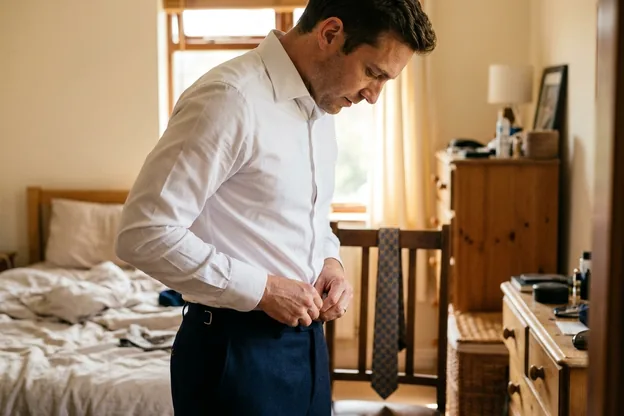
Workdays, weekends and the course — the same belt in every one.
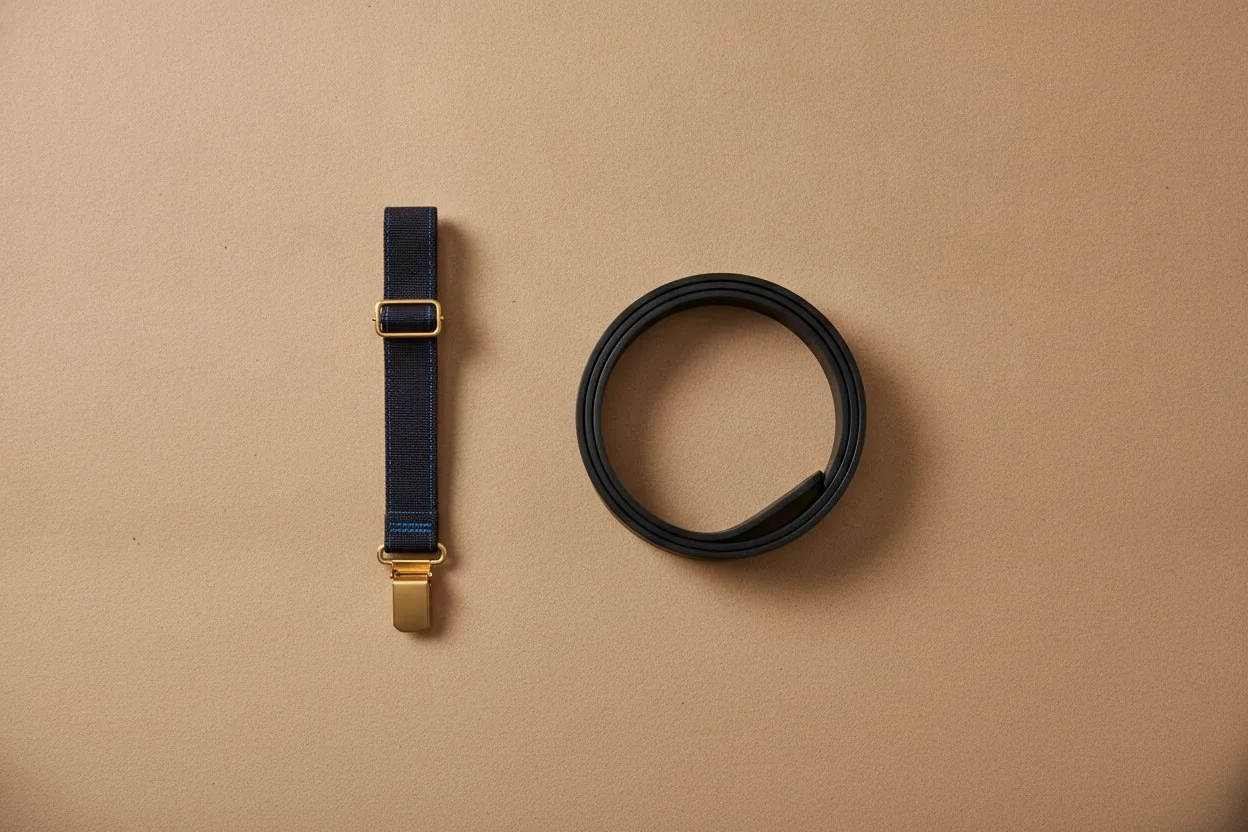
Shirt stays solve a real problem — but the design you choose decides the trade-offs.
The big pro of shirt stays is simple and real: they keep your shirt tucked far better than tucking alone, all day, through movement. The cons depend on type — leg-strap garters bring hair-pull, sit-down tension, clip failures, and bathroom hassle, while cheap elastic belts stretch out fast. The sweet spot is a rubber waist belt: it keeps the core benefit (a shirt that stays tucked) while dropping the leg straps, clips, and tension that cause the cons.
THE CASE FOR SHIRT STAYS
Let's start with why shirt stays exist at all, because the core benefit is genuinely worth having. Tucking a shirt in and hoping it stays put is a losing game: you bend to pick something up, reach overhead, sit down for an hour, and the hem creeps out. By mid-afternoon you're doing the discreet bathroom-mirror re-tuck for the third time. A shirt stay ends that. It holds your shirt down so it stays crisp from morning to evening without a single re-tuck.
That's not a small thing. For anyone judged partly on how put-together they look — in an office, in a uniform, on a stage, at a wedding — a shirt that stays sharp all day is a real advantage. And for people who physically can't stop to re-tuck, like police officers, nurses, servers, and coaches, it's closer to essential. The concept delivers. The question has never been whether shirt stays work; it's what you give up to get that benefit.
THE REAL DOWNSIDES
Here's the honest part. Traditional leg-strap garters — the most common kind — come with a stack of genuine drawbacks, and it's worth naming them plainly. They clip to your socks and run down your leg, so they pull leg hair with every step. They tighten when you sit, because the distance from shirt hem to sock shrinks and the strap yanks on both ends. Their clips wear out and pop loose at the worst moments. And depending on how you're dressed, you may have to unclip and re-clip them every time you use the bathroom.
Cheaper alternatives have their own issues. Basic elastic belts stretch out and lose their grip within months, so the shirt starts riding up again. Tucking your shirt tail into your underwear works in a pinch but shifts and bunches through the day. None of these are dealbreakers for everyone, but they're real, and pretending otherwise doesn't help anyone choose well.
IT DEPENDS ON THE TYPE
The key insight is that "shirt stays" isn't one product — it's a category, and the pros and cons swing hard depending on which type you pick. A leg-strap garter and a rubber waist belt both keep your shirt tucked, but they get there in completely different ways, and those methods carry completely different trade-offs. Judging shirt stays as a single thing is like judging "shoes" without asking whether you mean running shoes or dress shoes.
So the useful question isn't "are shirt stays good or bad?" It's "which design keeps the benefit I want while dropping the drawbacks I don't?" Once you frame it that way, the comparison gets clear. The table below lays out the main types side by side, so you can see exactly where each one wins and where it costs you.
| Type | Pros | Cons |
|---|---|---|
| Leg-strap garters | Strong hold; time-tested; keeps the shirt firmly down | Pull leg hair; tighten when you sit; clips fail; bathroom hassle |
| Elastic belt | Cheap; simple; no leg contact | Stretches out and loses grip in months; can bunch or roll at the waist |
| Tucking into underwear | Free; needs nothing extra | Shifts and untucks through the day; bulky; only works for tucked-in styles |
| Rubber waist belt | Holds by friction all day; no leg contact; no clips; lasts years; invisible | A small upfront cost versus tucking for free |
THE BEST-OF-BOTH OPTION
Line the types up and one pattern jumps out: nearly every con belongs to something below the waist or to something that wears out. Leg hair, sit-down tension, and bathroom hassle all come from straps and clips on your legs. Lost grip comes from cheap elastic that stretches. Remove the leg contact and use durable rubber, and most of the downsides simply disappear — while the one pro everyone actually wants, a shirt that stays tucked, stays.
That's the Shirt Tucker. It's a rubber belt that wraps around your waist on the outside of your shirt, gripping the fabric by friction at the waistband. No leg straps, so no hair-pull, no sit-down tension, and nothing to unclip at the bathroom. No metal clasp, so nothing to fail. It sets up in about 30 seconds, disappears under your trousers, and lasts for years rather than months. You keep the whole reason to wear a shirt stay and drop almost the entire list of reasons people give them up.
ALL THE PROS, NONE OF THE CONS
The Shirt Tucker keeps your shirt tucked all day — without the leg straps, clips, or tension. $19.99.
Shop Now — $19.99