MILITARY TUCK VS SHIRT STAYS WHICH ACTUALLY KEEPS YOUR SHIRT TUCKED
Two ways to keep a uniform shirt sharp — one's a technique, one's a tool. Here's how they really compare, which holds longer, and why the sharpest uniforms use both.

 Two-Day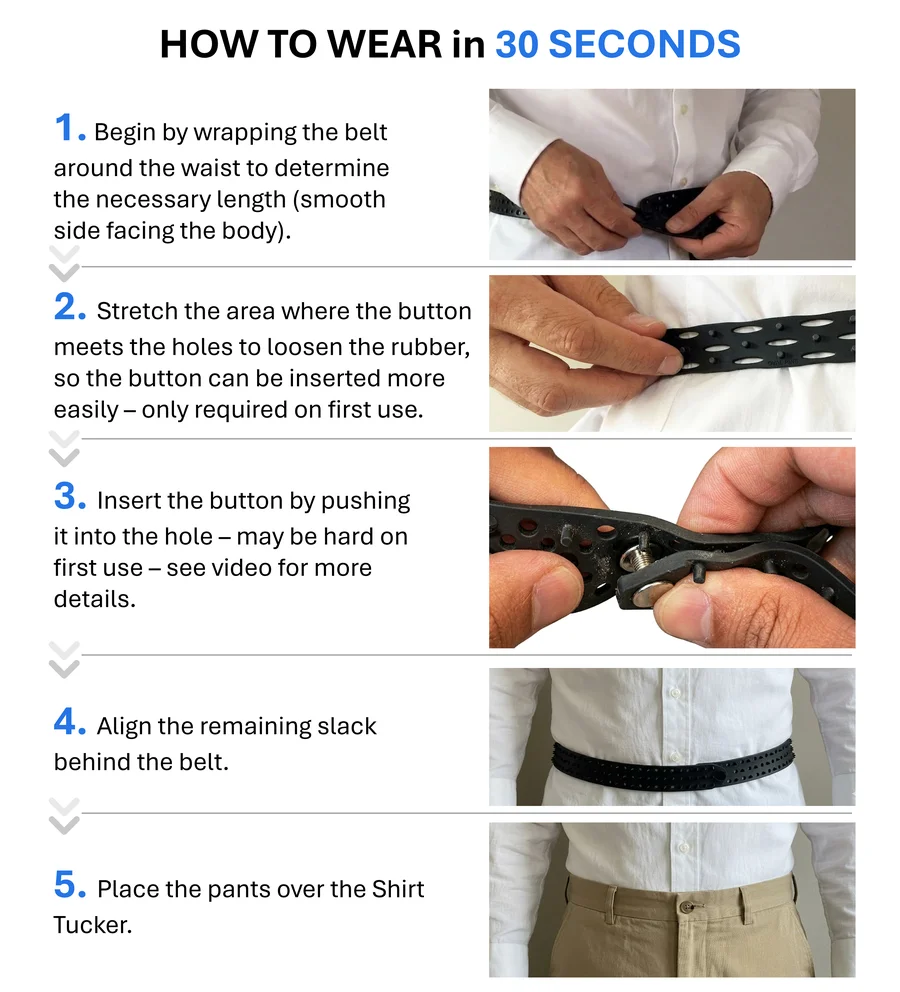
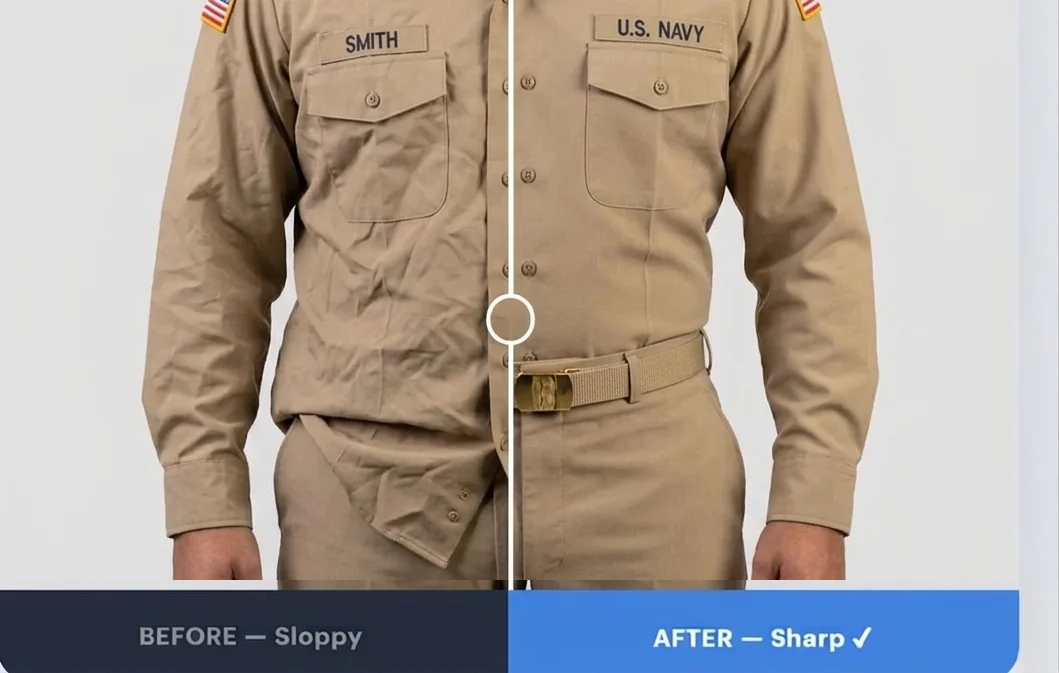
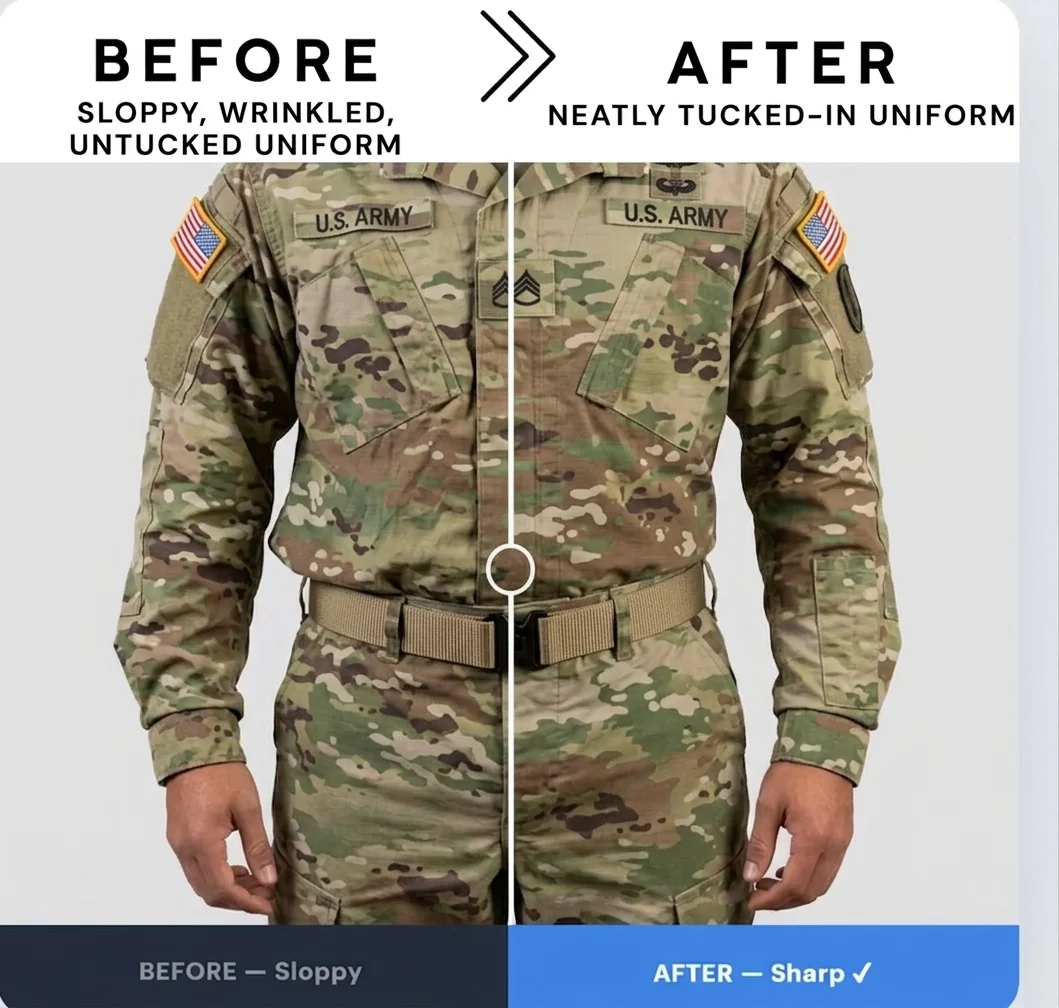
The military tuck and shirt stays solve the same problem two different ways — and they work best together, not as either/or. The military tuck is a folding technique that removes excess fabric for a clean waistline, but it relies on friction alone, so it loosens after 3-4 hours. Shirt stays physically hold the shirt down: leg-strap stays clip the shirt to your socks (effective but restrictive), while a belt-style stay like the Shirt Tucker grips the shirt at the waist with no leg straps. For the sharpest, longest-lasting result, do the military tuck first, then lock it in place with a waist-style shirt stay.
THE SHORT ANSWER IT'S NOT EITHER / OR
People search "military tuck vs shirt stays" expecting to pick a winner. The honest answer is that they're not really competitors — one is a technique and the other is a tool, and they do different jobs:
- The military tuck removes the excess fabric at your sides and back so your waistline is flat and clean. It's free, it's required in uniform, and it's the starting point.
- A shirt stay physically holds the shirt in place so the tuck you just made doesn't creep out. It's what turns a sharp-at-0600 tuck into a sharp-all-day tuck.
So the real question isn't "which one" — it's "which shirt stay should I add to my military tuck." Let's break down all three options.
OPTION 1 — THE MILITARY TUCK ALONE
The military tuck folds the excess fabric at your sides behind the pant seams and tucks the back tail under your waistband, leaving a clean, fitted waist. It's the foundation of a sharp uniform and it's taught in basic training across every branch.
The catch: it holds with friction only. There's no mechanism keeping the fabric down, so movement, sweat, sitting, and PT gradually pull it loose — usually within 3-4 hours. Great for a short ceremony; not enough for a full duty day on its own.
OPTION 2 — LEG-STRAP SHIRT STAYS
Leg-strap stays (sometimes called "shirt garters") clip to the bottom of your shirt and run down to clip onto your socks, pulling the shirt taut from below. They hold well and have been used in the military for decades.
The downside is comfort and convenience: the straps run down your legs, can dig in or restrict movement during PT, and have to be unclipped every time you use the bathroom. Plenty of people find them effective but uncomfortable enough to stop wearing them.
OPTION 3 — A BELT-STYLE SHIRT STAY (THE SHIRT TUCKER)
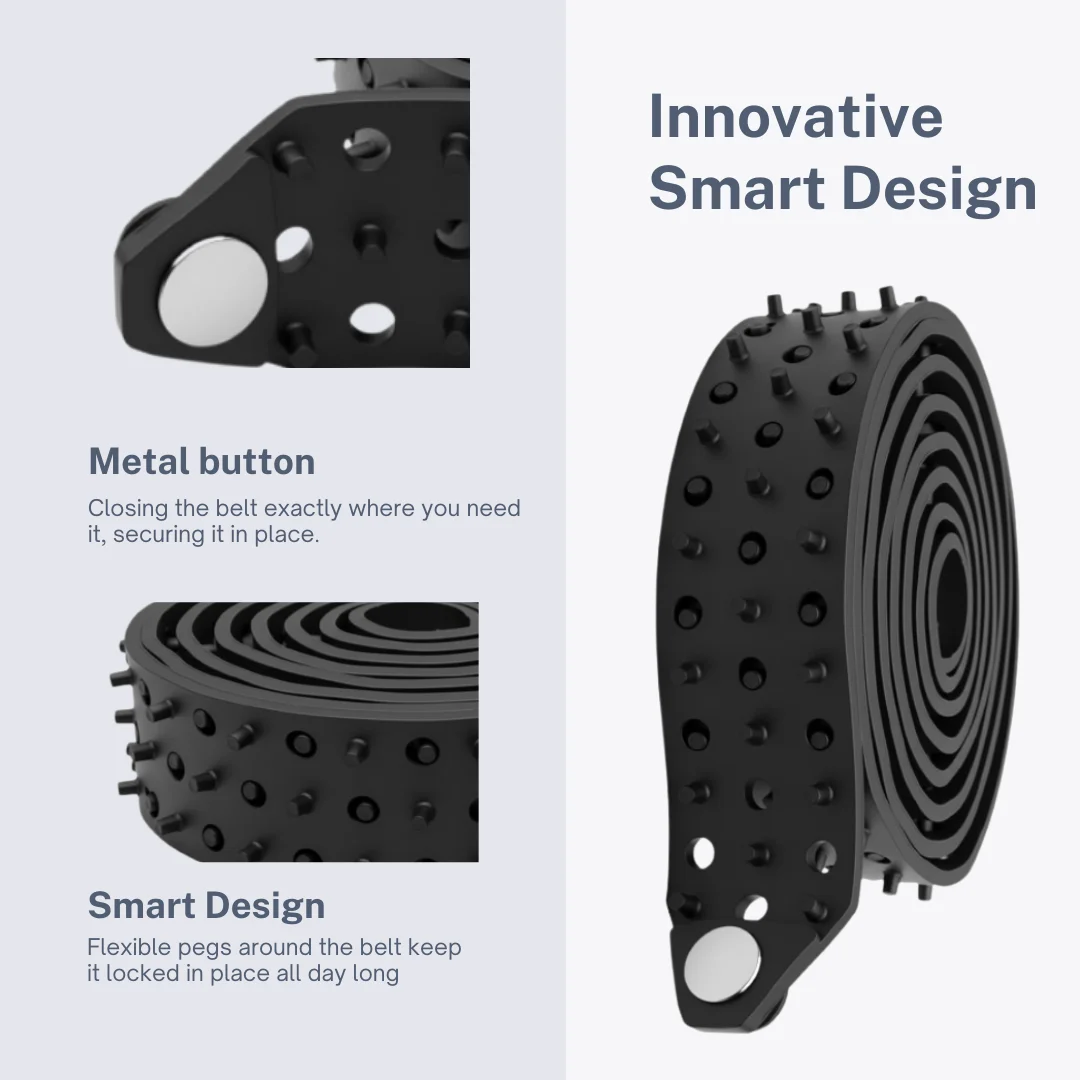
A belt-style stay grips the shirt at the waist instead of pulling it from the legs. The Shirt Tucker is worn under your shirt, inside the waistband, with no connection to your legs at all. The non-slip rubber grips the shirt fabric continuously, holding your tuck — and your gig line — in place all day.
Because there are no leg straps, you keep full mobility for PT, patrol, climbing, or a 12-hour shift, and nothing has to be unclipped for the bathroom. It's invisible under your shirt and outer belt, so it passes any inspection.
Military Tuck Alone
- Free and always required
- Holds only 3-4 hours
- Loosens during PT and long shifts
- Needs constant re-tucking
- No mechanism to hold it
Military Tuck + Shirt Tucker
- Holds 12+ hours, no re-tucking
- No leg straps — full mobility
- Nothing to unclip for the bathroom
- Holds the gig line straight too
- Invisible, inspection-ready
THE VERDICT DO THE TUCK, THEN LOCK IT
If you're choosing between the military tuck and shirt stays, the answer is to use both — the tuck for the clean fold, a shirt stay to hold it. And between the two kinds of shirt stay, a belt-style option like the Shirt Tucker gives you the all-day hold of leg straps without the discomfort or the bathroom hassle.
That combination — military tuck plus a waist-style stay — is what keeps uniforms inspection-sharp from morning formation through a full duty day, with zero re-tucking in between.

THE SHIRT TUCKER
The belt-style shirt stay that holds your military tuck all day. No leg straps, no re-tucking, inspection-ready.
Shop Now — $19.99