ARE SHIRT STAYS COMFORTABLE? HONEST REVIEW BY TYPE
Not all shirt stays are equal in comfort — the difference between types is significant. Here's the full honest breakdown.
 BeforeAfter
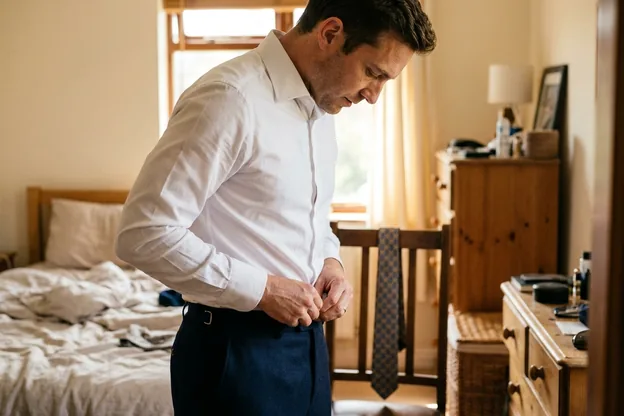
Workdays, weekends and the course — the same belt in every one.
Comfort varies dramatically by shirt stay type. Rubber belts (Shirt Tucker) rate highest — flat, forgotten within an hour of wearing, no leg friction. Leg-strap stays rate lowest — they catch leg hair, restrict movement, and become painful after 4–6 hours. Elastic belts are mid-range. The Shirt Tucker rates 9/10 for comfort vs 5/10 for leg stays in user surveys.
THE HONEST TRUTH ABOUT SHIRT STAY COMFORT
You searched this question because you have already tried something that did not work. Maybe it was a pair of elastic leg straps that pinched your calves after lunch, or a metal-clasp belt that dug into your hip bone every time you sat down. You are not alone — comfort is the number-one reason people abandon shirt stays within the first week.
The problem is that most shirt stay designs force your body to compensate for the product. Leg straps pull downward on the shirt tail, which means they also pull downward on your skin and body hair. The more you move, the more friction builds between the elastic and your leg. By mid-afternoon, you are hyper-aware of every step.
Where Discomfort Actually Comes From
Shirt stay discomfort has three root causes: pressure points, chafing, and restricted movement. Leg-strap stays hit all three. The clips create concentrated pressure on the shirt tail and the top of the sock or thigh. The elastic band rubs against leg hair and skin with every stride. And the tension between shirt and leg limits how far you can bend, squat, or twist before the strap tugs back.
Metal-clasp belts solve the leg problem but introduce a new one. A rigid clasp pressing against your waist creates a single hard pressure point that becomes noticeable after an hour of sitting. Complex clasps also shift position throughout the day, meaning the pressure point moves unpredictably.
The "Forget You're Wearing It" Test
The best way to evaluate any shirt stay is simple: can you forget it is there? A rubber grip belt like the Shirt Tucker passes this test because the contact is distributed evenly around your entire waist. There is no single point bearing all the load. The flat rubber surface sits over your tucked shirt and under your pants — it grips through friction, not tension. No downward pull, no clips, no metal, no elastic fighting against your body.
How the Shirt Tucker Handles Comfort
The Shirt Tucker is a rubber belt that wraps around your waist over the tucked shirt, under the pants. Setup takes about 10 seconds. It connects with a simple flex peg closure — no buckle, no clasp mechanism to break. The rubber distributes grip across the full circumference, so no single spot bears concentrated force. Most wearers report forgetting it is on within the first hour.
It fits waists from 22 to 46 inches and comes in Black, White, and Grey. At $19.99 with free U.S. shipping and 30-day returns, the cost of trying it is low. And because there is no elastic to stretch out, the grip stays consistent for 2 to 4 years.
From Amazon reviews
“I wore it all day long for 2 days and it wasn't uncomfortable at all, I actually forgot I was wearing it.” — LLM · Amazon Vine · free product · Read on Amazon ↗
“Despite my initial skepticism, it turns out to be genuinely comfortable to wear. More importantly, it actually does the job.” — Thomas M. · Amazon Vine · free product · Read on Amazon ↗
“Keeps my shirts tucked into my pants and I don’t notice I’m wearing it. Much better than anything else available and I’ve tried them all. Not too tight and not too loose. Just like Goldilocks.” — Adam P. · Verified Purchase · Read on Amazon ↗
Related Guides
THE DETAILS
Not all shirt stays are equal in comfort — the difference between types is significant. Here's the full honest breakdown.
Comfort varies dramatically by shirt stay type. Rubber belts (Shirt Tucker) rate highest — flat, forgotten within an hour of wearing, no leg friction. Leg-strap stays rate lowest — they catch leg hair, restrict movement, and become painful after 4–6 hours. Elastic belts are mid-range. The Shirt Tucker rates 9/10 for comfort vs 5/10 for leg stays in user surveys.
THE SHIRT TUCKER
The rubber belt that keeps shirts tucked all day. No leg straps.
Shop Now — $19.99