DO SHIRT STAYS DAMAGE YOUR SHIRT?
Clip-on stays grip your shirt with metal teeth — and on fine fabric, that grip can leave a mark. Here's the real risk and how to hold a shirt without it.
 BeforeAfter
Workdays, weekends and the course — the same belt in every one.
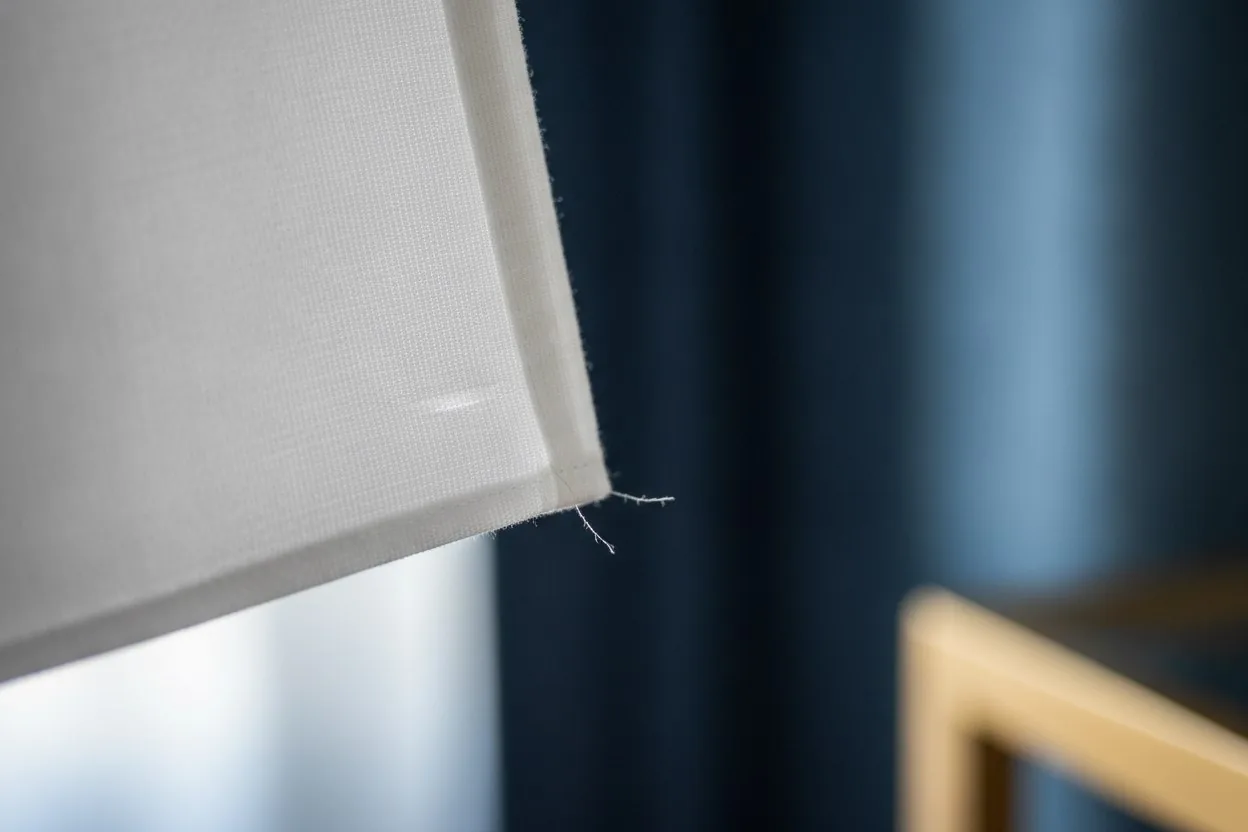
Metal teeth grip fabric hard — sometimes hard enough to leave a mark.
They can. Metal-clip shirt stays bite the shirt hem with toothed clasps, and on fine or delicate fabric that can leave pinch marks, snags, or even small holes over time — especially where the same spot is clipped daily. Thin dress shirts and knits are most at risk. A clip-free rubber belt can't damage your shirt: it grips the fabric flat against your waist by friction, with no teeth, points, or pinch — so your shirts stay pristine.
HOW CLIPS MARK FABRIC
A traditional shirt stay does its job with a clasp — a spring-loaded jaw lined with small teeth that clamps onto the bottom of your shirt. Those teeth exist for a reason: they need to bite hard enough to hold the shirt against constant downward tension without slipping. But that same biting force is what puts your fabric at risk.
When a clip clamps down, it concentrates all its grip onto a tiny patch of cloth — often just a few threads wide. On sturdy fabric that patch shrugs it off. On fine fabric, the teeth press between the fibers, and each time you move, the clip works against the weave. Over a day that shows up as a faint crease or a shiny pressed spot. Over weeks it can become a genuine snag or a pull in the fabric.
The damage isn't dramatic on day one, which is exactly why it sneaks up on people. You don't notice until you take a favorite shirt out of the wardrobe and spot a little run of pulled threads right at the hem.
WHICH SHIRTS ARE MOST AT RISK
Not every shirt is equally vulnerable. The clasp is roughest on lightweight and delicate materials: thin poplin dress shirts, silk and silk-blend shirts, fine broadcloth, and soft knits. These have loose or fine weaves where the teeth can slip between threads and drag them out of place, and they lack a stiff, reinforced hem to protect the cloth.
Heavier fabrics — oxford cloth, thick twill, flannel — tolerate clips far better, because their dense weave and thicker yarns resist the teeth. But even they aren't immune. Any shirt you clip in the exact same place every single morning will eventually show wear, no matter how tough the cloth.
The rule of thumb is simple: the nicer and thinner the shirt, the more a metal clip has to lose. The shirts you most want to keep looking sharp are the ones clips are most likely to spoil.
THE REPEAT-CLIP WEAR SPOT
The real culprit isn't one bad clamp — it's repetition. Most people clip their stays to roughly the same point on the shirt tail every day out of habit. That turns a small area of fabric into a permanent stress point that gets bitten, tensioned, and released hundreds of times over the life of the shirt.
Add laundering to the mix and the problem accelerates. A tiny snag that would sit harmlessly on an untouched shirt gets agitated in the wash, and the pulled thread works looser until a small hole opens up. By then the shirt is often only fit for casual wear — a costly outcome for a $20 accessory meant to make you look put-together.
PROTECT YOUR SHIRTS WITH FRICTION, NOT TEETH
There's a straightforward way to keep your shirts pristine: hold them with friction instead of teeth. That's the whole design of the Shirt Tucker. It's a rubber belt that wraps around your waist on the outside of your shirt, under your trousers, and grips the fabric flat against your waistband. There's no clasp, no metal, and no single point of pressure — the hold is spread evenly across a wide band of rubber.
Because nothing bites the cloth, there's nothing to snag, pinch, or tear. You can wear it with your finest silk shirt or your softest cotton tee and it comes off leaving no mark at all. It sets up in about 30 seconds, lasts for years, and never touches your legs. Your shirt stays tucked all day and stays flawless in the process — which is exactly what a shirt stay should do.
Clip-Free Rubber Belt
- No teeth or clasp — nothing to bite the cloth
- Grips fabric flat by friction, pressure spread wide
- Safe on silk, thin cotton, and soft knits
- Comes off with no marks, snags, or holes
- Same spot never becomes a wear point
Metal-Clip Stays
- Toothed jaws concentrate pressure on a few threads
- Can leave pinch marks, snags, or small holes
- Worst on fine dress shirts, silk, and knits
- Repeat-clipping creates a permanent wear spot
- Snags grow with every wash
HOLDS YOUR SHIRT WITHOUT HARMING IT
The Shirt Tucker grips your shirt by friction, not teeth — no marks, no holes. $19.99.
Shop Now — $19.99