DO SHIRT STAYS WORK WITH T-SHIRTS?
Clip stays were built for stiff dress-shirt hems — soft knit tees are a different problem. Here's what actually keeps a tucked tee in place.
 BeforeAfter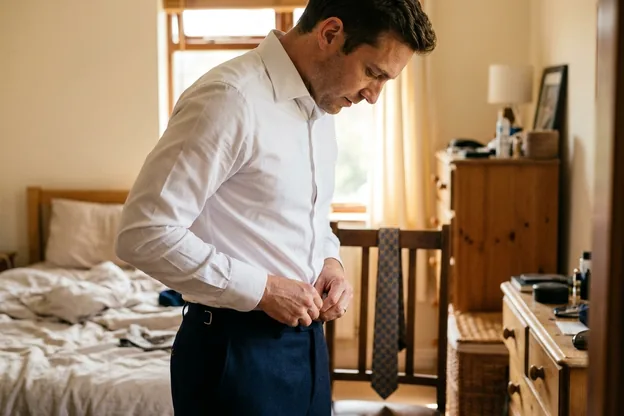
9am to 6pm, sitting and standing, still sharp.
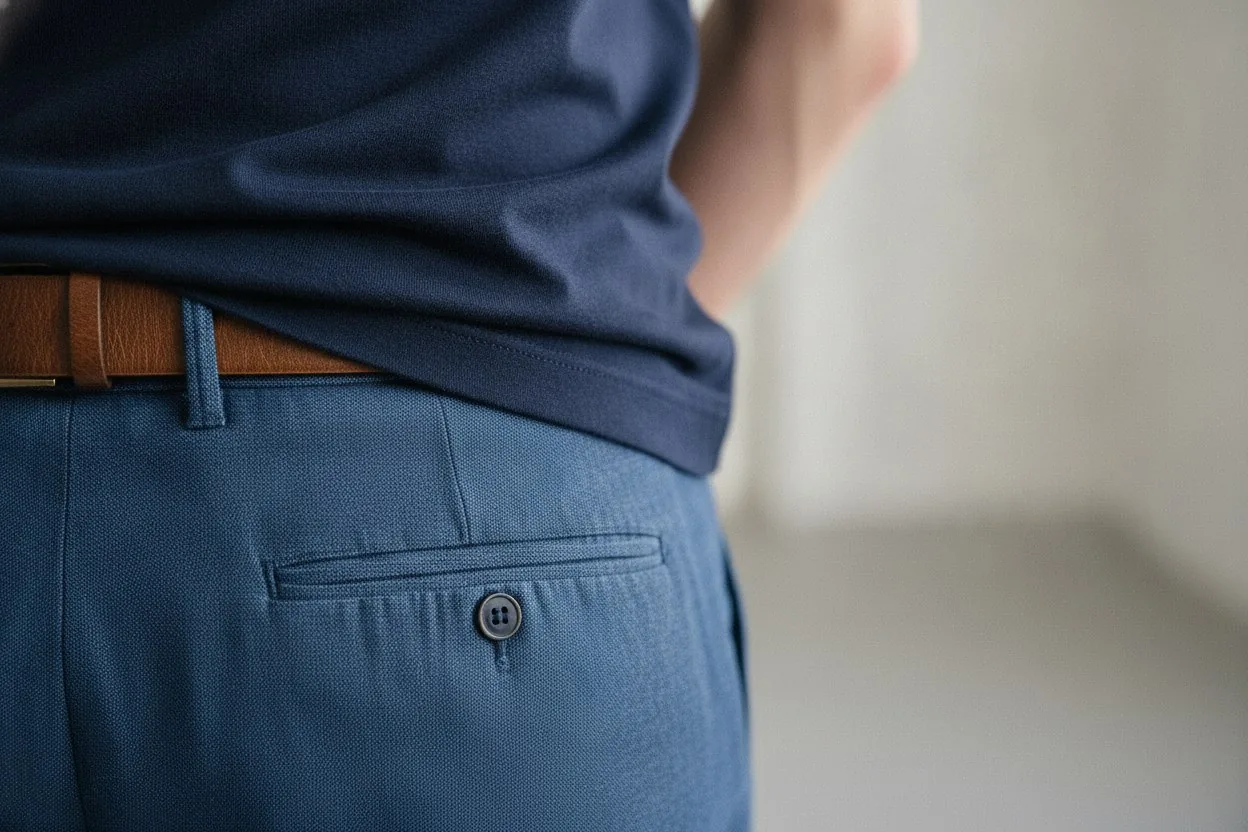
Soft knit tees are exactly the fabric that clips struggle with.
Not well. Clip-on shirt stays are designed for woven dress-shirt hems; on a soft knit t-shirt the clips can slip, stretch the fabric, or even leave holes, and there's no crisp hem for the clasp to bite. A waist-only rubber belt works beautifully with t-shirts and undershirts because it grips the whole fabric against your waist by friction — no clip, no hem needed — so tucked tees, polos, and base layers stay put without damage.
WHY CLIPS STRUGGLE WITH KNITS
A clip-on shirt stay is engineered around one assumption: that it's biting into the firm, woven hem of a dress shirt. That hem is stiff, tightly woven, and reinforced with a folded seam, which gives the toothed clasp plenty to grab and hold. A t-shirt offers none of that. Jersey knit is stretchy, loose, and soft, so the clip has nothing rigid to lock onto.
The practical result is a clasp that keeps slipping. Every time you move, the knit gives a little, the clip loses its purchase, and the stay pops off. You end up re-clipping over and over, and even then it never feels secure. It's not that you're doing it wrong — the fabric simply isn't what the tool was made for.
THE RISK OF STRETCHING AND HOLES
The bigger problem is damage. Because a clip has to bite hard to hold at all on a knit, it puts concentrated stress on delicate fibers that aren't reinforced by a hem. On a favorite tee that shows up as a stretched-out, puckered spot near the bottom that never quite recovers its shape.
Worse, the metal or plastic teeth can pierce the weave and open a small hole. Knits ladder and run once a fiber breaks, so a single clip can quietly ruin a shirt. If you care about your tees — and especially if they're thin, soft, or fitted — clipping them is a gamble you'll usually lose over time.
UNDERSHIRTS AND BASE LAYERS
Undershirts and athletic base layers are knits too, so they inherit all the same issues, plus one more: bulk. Clipping a stay to an undershirt means adding a strap and clasp underneath your dress shirt, right where you least want extra hardware. You can feel it, it can print through, and it defeats the clean look you were tucking for in the first place.
For anyone layering — a tee under a flannel, a compression base layer under a uniform, an undershirt under a dress shirt — clip stays add friction and risk without a reliable payoff. The knit under-layer needs to be held, not pierced.
FRICTION GRIP WORKS ON ANY FABRIC
The Shirt Tucker solves this by changing how the shirt is held. Instead of biting a single point of the hem, it wraps around your waist over the shirt and presses the whole band of fabric flat against your waistband. That friction grip doesn't care whether the fabric is a stiff woven hem or a soft jersey knit — it holds either one the same way.
Because there's no clasp and no teeth, there's nothing to slip off a stretchy knit and nothing to stretch or tear it. A tucked tee stays down as you reach and bend, an undershirt stays smooth under your dress shirt, and a polo keeps its line on the course. One belt handles tees, polos, base layers, and dress shirts without damaging any of them.
Rubber Belt with Knits
- Grips soft jersey and knit fabric by friction
- No clasp to slip off stretchy material
- Won't stretch, pucker, or hole your tee
- Holds undershirts and base layers smoothly
- Same reliable hold on tees, polos, and dress shirts
Clips with Knits
- Nothing rigid for the clasp to bite on a knit
- Slips loose and needs constant re-clipping
- Can stretch the fabric out of shape
- Teeth can pierce fibers and open holes
- Adds bulk you can feel under a layered shirt
HOLDS TEES, POLOS & DRESS SHIRTS
The Shirt Tucker grips any fabric by friction — no clips to slip or tear your knits. $19.99.
Shop Now — $19.99