WHAT IS A SHIRT TAILOR BELT?
“Shirt tailor” is the uniform-trade name for a rubber belt that holds your shirt tucked at the waist. Here is how one works, and what separates a good one from a frustrating one.
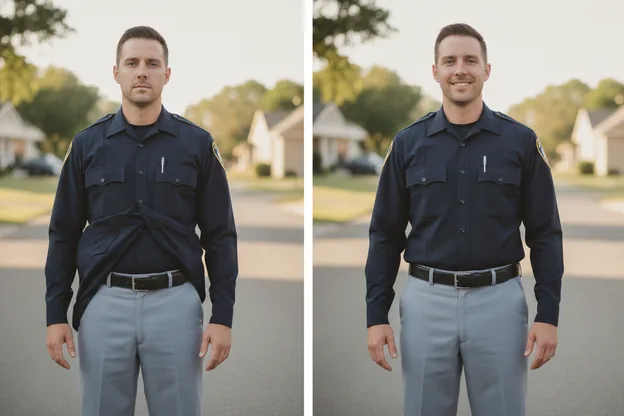 BeforeAfter

Duty, desk and weekend — the same belt in every one.
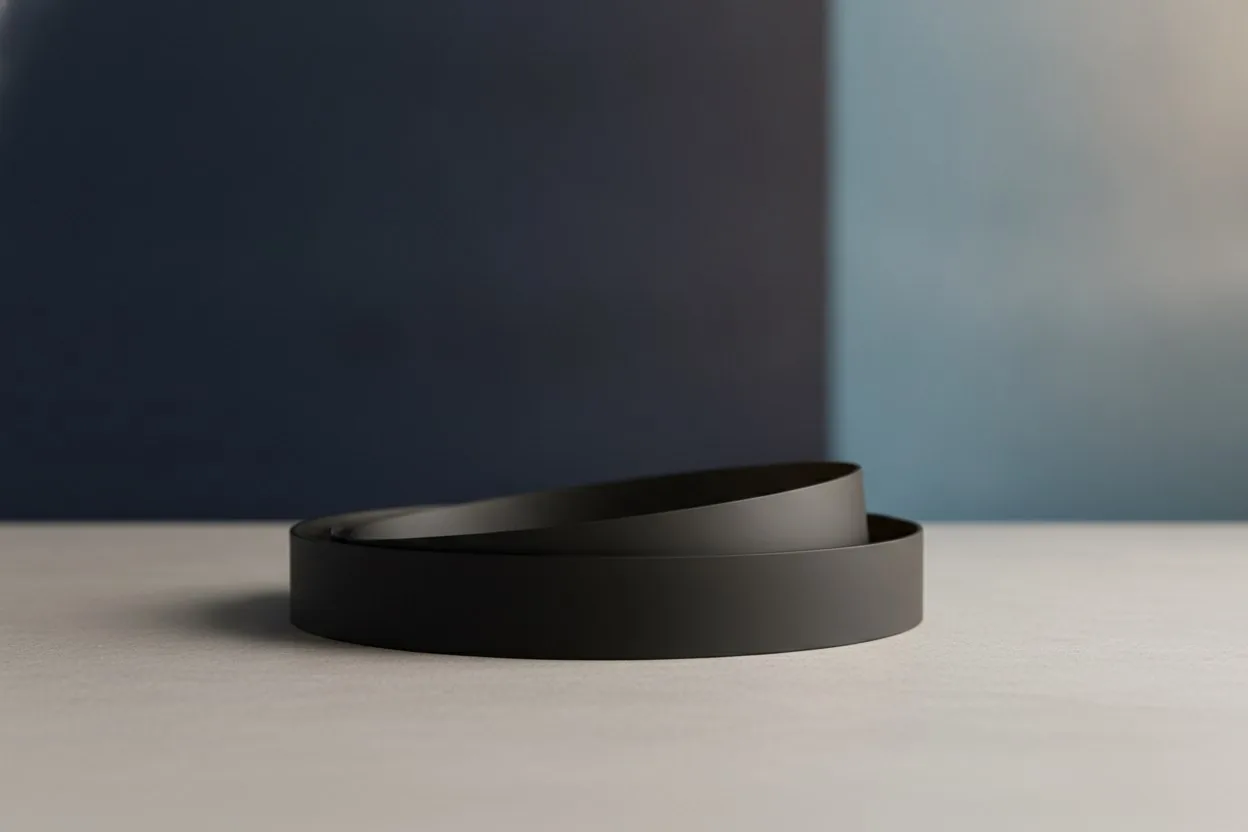
A shirt tailor belt: one band of textured rubber, worn at the waist.
A shirt tailor belt is a flexible rubber band worn around your waist, inside your waistband and over your tucked shirt. The textured rubber grips the shirt fabric by friction and holds the entire tucked section flat, so nothing rides up when you move. Nothing runs down your legs and there is no clip biting your shirt hem — which is exactly why uniform wearers moved to them from leg-strap shirt stays. The Shirt Tucker is a shirt tailor belt: $19.99, one size, adjusts 22–46 inches.
WHY IT'S CALLED A SHIRT TAILOR
If you have searched for “shirt tailor belt” and landed on a mix of tailoring services and police duty gear, that is the term doing two jobs at once. In the uniform trade — law enforcement, military, fire, EMS, security — a shirt tailor is a product, not a person. It is the rubber waist belt that keeps a uniform shirt looking pressed through a shift. Uniform suppliers file them under headings like “shirt stays and tailors,” and the name is a play on shirttail: the part of the shirt the belt actually holds down.
You will see the same product sold under four names, and they all mean the same category:
- Shirt tailor / shirt tailor belt — the uniform-supply name, almost always the waist-worn rubber version.
- Shirt keeper — common in retail listings, same design.
- Rubber shirt stay — the descriptive name, used to separate it from clip-on stays.
- Shirt stay — the broadest term, and the one worth watching. It covers leg straps and garters too, which are a completely different design.
That last distinction is the one that costs people money. Search “shirt stays” and most results are elastic straps that clip your shirt hem to your socks. Search “shirt tailor” and you are almost always looking at a waist belt. If you want the belt, the more specific term gets you there faster.
HOW A SHIRT TAILOR BELT WORKS
The mechanism is friction, not clamping. You tuck your shirt the way you normally would, then wrap the rubber band around your waist over the shirt and inside your trouser waistband. The rubber presses a wide band of shirt fabric flat against your body. Rubber has a naturally high grip against cotton and polyester, so that even pressure is enough to stop the tucked section from creeping up when you bend, reach or sit.
Because the hold runs all the way around your waist rather than through three or four clip points, there is no single spot that can slip. And because nothing bites the fabric, there are no teeth to stretch a knit or put a hole in a dress shirt. The belt sits under your trousers, not under your shirt, so it does not show through the shirt fabric.
What it is not is a trouser belt. A shirt tailor belt does not hold your pants up and is not visible when you are dressed. You wear it in addition to whatever belt your uniform or outfit calls for — and if you carry a duty belt, the rubber also sits between the loaded belt and your hip as a buffer.
THE CLOSURE IS THE WHOLE PRODUCT
Nearly every shirt tailor belt on the market uses the same material. What separates them is how they fasten, and it is worth understanding before you buy, because the closure is where they fail.
The two designs are a flex peg and a metal clasp. A flex peg is a button-and-hole: you stretch the rubber slightly, push the peg through the hole that matches your waist, and you are done. Size it once and you never unfasten it again — from then on the belt stretches on and off over your hips like a waistband. A metal clasp is a hinged buckle you open and close every time you dress, which means a mechanism under repeated load, in a product whose whole job is to stay under tension all day.
That difference shows up in reviews. Clasp complaints cluster around two things: not being able to work out how the mechanism goes together without directions, and the clasp giving out — sometimes on the first use. A peg has nothing to hinge, spring or misalign. When you are comparing two rubber belts that look identical in the photos, look at the closure first.
WHAT TO LOOK FOR IN A SHIRT TAILOR BELT
Five things separate a belt you forget you are wearing from one you stop using after a week:
- Closure type. A simple peg beats a hinged clasp on setup time, daily convenience and lifespan.
- Adjustment range. A band that covers roughly 22 to 46 inches fits nearly everyone, and means you are not guessing at a size.
- Rubber thickness and grip texture. Thin rubber slips and curls at the edges. A textured surface holds noticeably better than a smooth one on slick shirting.
- Trim-to-fit. Being able to cut the excess with household scissors gives you a flat, no-bulk profile under a uniform shirt.
- Colour under light fabrics. Black disappears under dark uniforms; white is the one that will not shadow through cream chinos or white golf trousers; grey splits the difference under oxfords and scrubs.
WHO WEARS SHIRT TAILOR BELTS
The category grew out of law enforcement and the military, where a gig line has to stay straight through a twelve-hour shift and there is no chance to re-tuck in front of a mirror. Officers, security staff, firefighters and EMS still make up the core of it, and the duty-belt cushioning is a real secondary reason they get worn.
From there it spread to anyone who cannot stop to fix a shirt: nurses and clinical staff, teachers, servers and hospitality, and pilots. Golfers picked it up because a full backswing is exactly the movement that untucks a polo, and it has become standard for grooms and groomsmen who need a shirt to hold through a long reception. The requirement is the same in every case — the shirt has to stay put without anything strapped to your legs.
Shirt Tailor Belt (Waist)
- Nothing runs down your legs or touches your skin
- Holds all the way around — no single failure point
- Stays on when you use the restroom
- Doubles as a cushion under a loaded duty belt
- Two to four years of daily wear
Leg-Strap Shirt Stays
- Straps run down your thighs and pull leg hair
- Clip teeth can stretch or hole fine fabric
- Have to be unclipped for the restroom
- Three or four clip points, each able to pop loose
- Elastic and clasps wear out and need replacing
THE SHIRT TAILOR BELT, DONE SIMPLY
The Shirt Tucker is a rubber shirt tailor belt with a one-time peg closure — no clasp to fight with every morning. Black, white or grey.
Shop Now — $19.99